Where Your Clog Probably Is
The pattern of which drains are slow tells a plumber most of what they need to know before a single tool comes off the truck. Check these against what you are seeing.
| What you notice | Likely location | Usual method |
|---|---|---|
| One sink or tub is slow, everything else drains | That fixture's trap or branch line | Hand auger or small cable |
| Kitchen sink backs up into the other basin | Kitchen branch, usually grease | Cable, then jetting if it returns |
| Toilet gurgles when the washer drains | Shared branch or main line starting to restrict | Main line cable from the cleanout |
| Water rises in the lowest shower or tub when a toilet flushes | Main sewer line | Main line cable, then camera inspection |
| The same line clogs every few weeks | Roots, a sag or a broken pipe section | Camera inspection before more cleaning |
That last row matters. Clearing the same line over and over without looking inside it is how a routine cleaning bill turns into a full line replacement. A camera look inside the line shows whether the line is merely dirty or actually damaged.
Emergency Drain Cleaning When Water Will Not Go Down
A clog becomes an emergency when water backs up into a tub or floor drain from somewhere else, when every fixture in the house is slow at once, or when it stops the only toilet. Those signs point to the main line rather than one fixture, and they get worse every time water runs.
Stop using water until the line is open, including the washing machine and dishwasher. The emergency line dispatches a plumber with a cable machine at any hour, and if the cable brings back roots or the line keeps refilling, a camera can be run on the same visit to show what caused it.
Snake, Jet or Camera: Picking the Right Method
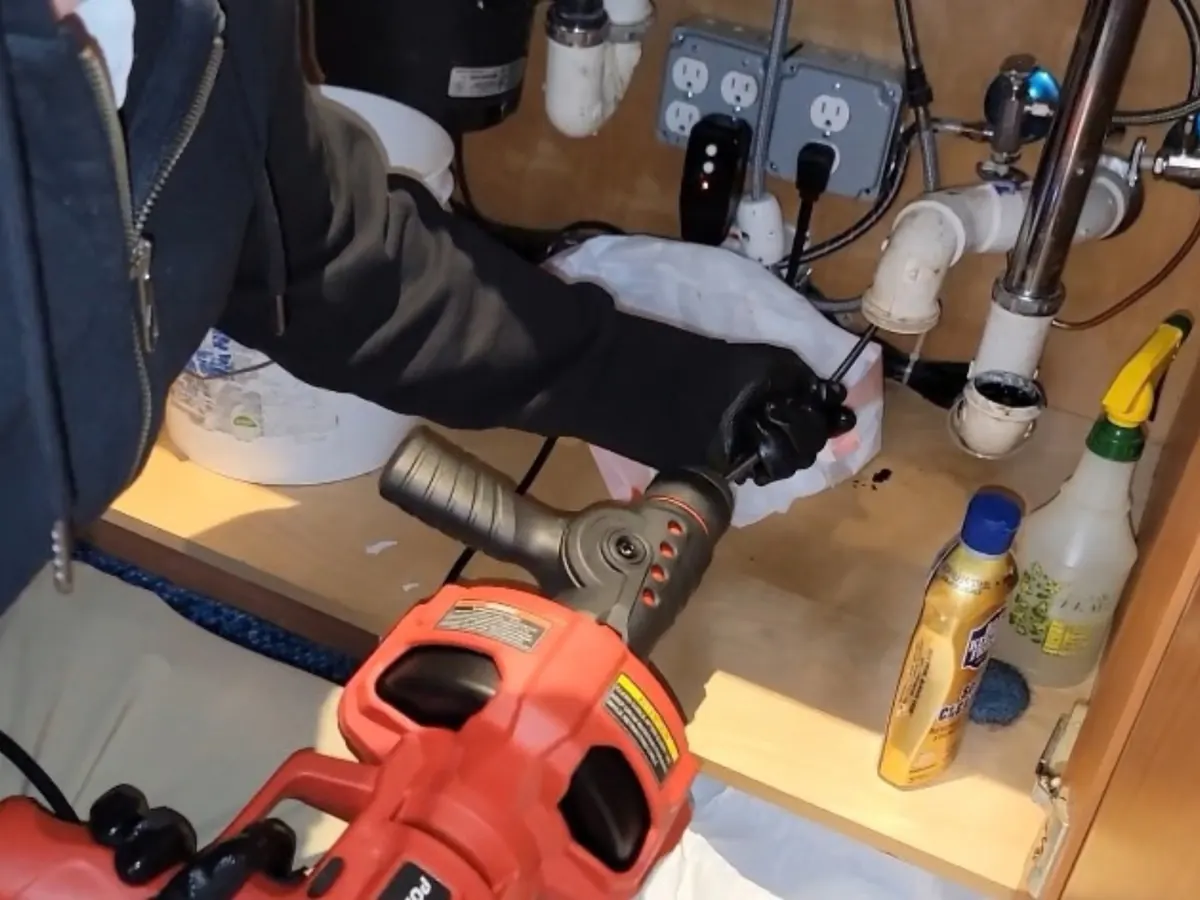
A cable machine, often called a snake, drives a spinning cutting head through the pipe. It is the right first tool for most clogs and it opens a line quickly, but it bores a hole through the blockage rather than scrubbing the pipe walls clean.
Hydro jetting uses high-pressure water to scour grease and scale off the full circumference of the pipe. It suits kitchen lines coated in grease and main lines that keep closing up. It is not the right choice for a fragile, badly cracked pipe, which is one more reason to look with a camera first when the line is old.
Neighborhood age changes the clog. Streets around Lakeview Park in North Nampa and the historic downtown near the 1903 train depot have older drain lines that can roughen inside and catch debris, while newer lines in South Nampa clog more often from wipes than from age.
Sewage Backing Up Into the House?
Stop running water and flushing toilets, then call. An emergency plumber is on call 24/7.
What Clogs Nampa Drains Most Often
Grease is the most common kitchen culprit here, as it is everywhere. The city takes it seriously enough that Nampa's wastewater pretreatment program requires grease interceptors at restaurants, bakeries, schools and other food businesses, because grease hardens in sewer pipes and causes blockages and overflows. A home kitchen line has no interceptor, so every pan of bacon fat poured down the sink stays in your pipe.
Older homes near downtown Nampa are more likely to have cast iron drains, which roughen inside as they age and catch debris faster than smooth PVC. When those lines keep clogging, the fix is sometimes a section replacement rather than another cleaning, and our sewer repair crews handle that side of the job.
Newer subdivisions have their own pattern. Flushable wipes and paper towels are the usual suspects in lines that are only a few years old, and they tend to snag at the first bend outside the house.
What to Do While You Wait for the Plumber
- Stop adding water. Every flush or running tap pushes more water toward the blockage, and on a main line clog it comes up at the lowest drain in the house.
- Skip the chemical drain opener. Caustic products sitting in standing water can burn skin and eyes when the line is opened, and they can damage older pipe.
- Do not plunge a line you already treated. Plunging splashes whatever chemical is in the drain.
- Find the cleanout if you can. The Uniform Plumbing Code (UPC) calls for accessible cleanouts on building drains, and yours is often a capped pipe outside near the foundation or in a crawlspace. Tell the dispatcher where it is so the plumber can go straight to it.
- Check with a neighbor. If the house next door is backing up too, the problem may be in the public sewer main, and the city should be told.
What Changes the Cost of Clearing a Drain
A clog at a single sink is a short visit. A main line blockage with no accessible cleanout is a longer one, because the plumber may need to pull a toilet to reach the line.
Homeowner insurance rarely covers the clog itself. Some policies cover the water damage from a sewer backup only if you added a sewer backup endorsement, so check your policy wording.
Want your real number? Call (208) 679-8357 and describe which drains are affected.
Keeping Drains Clear Between Visits
Most drain clogs are built one meal and one shower at a time. Kitchen lines clog from fat, coffee grounds and starchy food. Bathroom lines clog from hair and soap scum, which hard water makes worse because minerals bind soap into a sticky film.
A few habits cut the call rate sharply. Wipe greasy pans with a paper towel before washing. Put a hair catcher over every shower and tub drain. Run hot water for 15 seconds after using the kitchen sink.
Skip enzyme or chemical drain cleaners as routine maintenance on older pipe. They do little for a real blockage and can be hard on aging cast iron and the gaskets in newer plastic lines.
How Each Type of Clog Is Handled
The location of the clog changes the tool, the access point and the time on site.
| Clog type | Usual cause | Access point | Typical approach |
|---|---|---|---|
| Kitchen sink | Grease, food, coffee grounds | Under-sink trap or wall cleanout | Cable, then jetting if it keeps returning |
| Bathroom sink or tub | Hair, soap scum, mineral film | Pop-up drain or trap | Hand auger, trap cleaning |
| Toilet | Too much paper, wipes, objects | Through the bowl | Closet auger, or pull the toilet |
| Main sewer line | Roots, sags, wipes, grease | Outdoor cleanout | Main line cable plus camera |
Kitchen Sink Clogs, Garbage Disposals and the Dishwasher Drain
Kitchen sinks clog more than any other drain in the house because grease, coffee grounds and food scraps cool and stick inside the pipe. When one side of a double sink fills as the other drains, the clog is past the point where both sides meet.
The dishwasher drains through the same pipe, often through an air gap on the counter or a loop under the sink. If the air gap spits water when the dishwasher runs, the line below it is partly blocked, and cleaning the air gap alone will not fix it.
Running the disposal with plenty of cold water and keeping grease in the trash prevents most repeat clogs. A line that keeps closing up within weeks usually needs a camera to see whether grease, a sag or an old pipe is the cause.
Shower and Tub Drains, and When the Drain Pipe Itself Is Broken
Shower and tub drains slow down from hair and soap film that builds a mat just below the stopper. Pulling the stopper and clearing that mat fixes most of them, and a small cable handles what sits deeper.
If a drain leaks into the ceiling below or water shows up under the house when a fixture drains, the pipe itself may be cracked or a joint has separated. That is a drain pipe repair rather than a clog, and the section is cut out and replaced.
Clogged Drain Questions, Answered
Yes. Drain and sewer backups are covered 24/7, including weekends and holidays. When you call, say whether one drain or several are affected so the right equipment comes on the first trip.
Repeat kitchen clogs are almost always grease buildup along the pipe walls. Snaking opens a channel but leaves the coating behind, so the line closes again within weeks. Jetting removes the coating, and scraping pans into the trash instead of the sink keeps it from coming back.
It can be an early sign. Gurgling when another fixture drains means air is being pulled through the trap, which often points to a partial blockage in a shared line or a vent issue. It is cheaper to clear at this stage than after the line fully stops.
Yes. Tenants and property managers both call us. For recurring clogs in a rental, we can camera the line and give the owner a written description of what we found, which helps settle whether it is a use problem or a pipe problem.
Yes. The same emergency drain service covers Caldwell, Kuna, Star, Melba and nearby Middleton, where much of the housing is recent and wipes in young sewer lines are a frequent call.
They are hard on older pipes and gaskets, and they rarely clear a real blockage. A cable or jetting removes the clog without that risk.
A single fixture clog is often cleared in under an hour. A main line with roots or heavy grease can take longer, especially if a camera inspection follows.
A properly sized cable is safe for sound cast iron. If the pipe is badly corroded, the plumber will recommend a camera look before aggressive cleaning.
Yes. Yard drains, driveway trench drains and garage floor drains collect dirt and leaves and need jetting or cabling like any other drain. If a yard drain ties into the house sewer, it is checked as part of the main line.