A High Water Bill, a Running Meter, or Water You Cannot Trace
Most people who need leak detection do not know where the water is going, only that something is wrong. The meter keeps turning after every tap is closed. The bill doubled with no change in habits. Water appears at the edge of a floor or under a sink with no obvious drip.
In Nampa there is an extra wrinkle. Many homes have two separate water systems: city drinking water through the meter, and canal-fed pressurized irrigation on its own line. A soggy lawn in summer with a still meter points to the irrigation side. A spinning meter points to the drinking-water side. Knowing which system is leaking saves hours.
A quick self-check: close every fixture, note the meter reading, wait an hour without using water and read it again. Any change means water is leaving the system somewhere.
Canals add a twist in Nampa. The Ridenbaugh Canal carries irrigation water from Barber Park in Boise all the way to Lake Lowell. Homes near canals can see damp ground in summer that has nothing to do with their pipes, which is why we confirm with the meter before anyone digs.
Emergency Leak Detection When Water Is Actively Escaping
Most leak detection can wait for a scheduled visit, but some cannot. Water dripping from a ceiling, a meter that spins fast with every tap closed, or water coming up through the yard or a floor all mean the house is losing water right now and damage is building.
Close the main shutoff to stop the loss, then call the 24/7 line. An emergency visit focuses on finding the leak fast enough to make a safe repair or isolate the failed line, so the rest of the house can have water back while the permanent fix is planned.
Common Leak Locations and How We Find Them
Each location has a typical giveaway and a matching detection method.
| Location | Typical clue | Detection method |
|---|---|---|
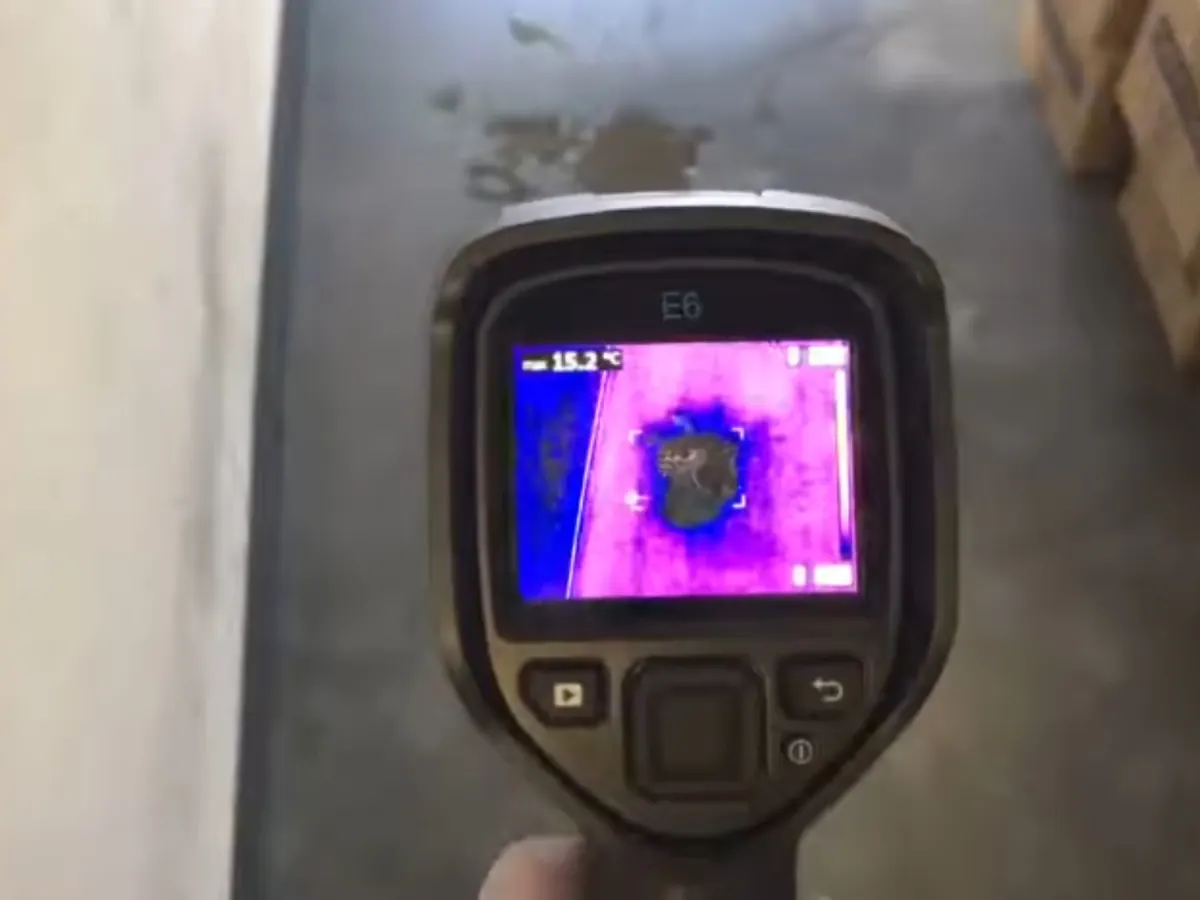
| Inside a wall | Stain, bubbling paint, musty smell | Thermal imaging and moisture meter |
| Crawlspace supply lines | Damp soil, standing water, humidity under the house | Visual inspection and pressure isolation |
| Under a concrete slab | Warm spot on the floor, sound of running water | Acoustic listening, then slab leak repair |
| Yard service line | Soggy strip between meter and house, meter running | Isolation at the main plus acoustic tracing |
| Toilet or fixture | Meter creeps slowly, tank refills on its own | Dye test and fixture check |
Water Showing Up Where It Should Not?
If it is spreading, close the main shutoff, then call for leak help any hour.
How Isolation and Instruments Narrow It Down
We start at the meter and work inward. Closing the main shutoff at the house tells us whether the leak is outside, on the service line, or inside. Closing individual fixture and branch valves narrows it further.
Once the zone is known, instruments do the rest. Acoustic equipment picks up the hiss of pressurized water escaping underground or in a slab. Thermal imaging shows the temperature signature of a hot-water leak behind drywall. A pressure test on an isolated section confirms whether that section is holding, the same kind of test the Uniform Plumbing Code (UPC) requires on new supply piping before it is covered.
If the leak sits on the line between the meter and the house, the repair is covered on our service line page. Leaks at fixtures are often simpler than they look.
Rural Properties and Private Wells
Homes on private wells have no city meter to watch, so leaks show up differently. A well pump that cycles on and off with no water in use is the classic sign, and it wears out the pump and pressure switch quickly.
The same isolation approach works. We close valves in stages and watch the pressure tank gauge instead of a meter. Acreage south of Nampa toward Melba and around Kuna often has long buried lines to shops and barns where these leaks hide.
What Affects the Cost of Finding a Leak
Detection is priced separately from the repair, because finding the leak is its own job. Knowing the exact spot usually lowers the repair cost, since less gets opened up.
Insurance often covers damage from a sudden hidden leak and sometimes the cost to access it. It rarely covers the pipe repair itself. Keep the detection report for your claim.
Want your real number? Call (208) 679-8357 and describe what tipped you off.
Ceiling Stains and Wet Walls: Tracing Water From Above
A ceiling stain is rarely right under the leak. Water runs along joists and pipes before it soaks through, so the spot you see may be several feet from the shower valve, toilet seal or supply line that is actually failing.
We test the fixtures above one at a time, running the shower, filling the tub and flushing the toilet while watching the stain with a moisture meter and thermal camera. Only when the readings point to one spot does anyone cut an inspection opening, and it is kept small enough to patch.
If the stain only grows during rain or snowmelt, the roof or a window is the more likely source and a roofer is the right call. A plumbing leak usually shows up whenever the fixture above is used.
Leaks Under the House: Crawlspace Supply and Drain Lines
Many Nampa homes sit over crawlspaces, and that is where leaks hide longest. A musty smell, the sound of running water under the floor, a wet vapor barrier or a meter that moves with everything off are the usual clues.
Do not crawl in if there is standing water near wiring or a furnace. We inspect with lights and moisture meters, check the supply lines that froze and split during the last cold snap and look at drain joints under bathrooms and the kitchen.
Once the leak is fixed, the crawlspace has to dry. Wet insulation is pulled and the vapor barrier is cleared so moisture does not linger under the floor.
Hot Tubs, Pools and Outdoor Lines
Fill lines to hot tubs and pools, outdoor hose bibs and buried lines to a shop or barn can all leak where nobody looks. Isolating each one at its own valve and watching the meter shows quickly whether it is the source.
Lawn sprinklers in most Nampa subdivisions run on a separate pressurized irrigation system, so a soggy lawn with a still meter usually points to the irrigation side rather than your drinking water line.
Leak Detection Questions
Turn off every fixture and watch the water meter for an hour. If the reading changes, water is escaping. A sudden jump on your water bill with no change in use is another strong sign.
Usually yes, down to a small area. Once the spot is confirmed, only that section needs to be opened for the repair.
In a home with pressurized irrigation, it usually means the leak is on the irrigation service line, not the drinking water. That line is on its own system and is the homeowner's responsibility past the curb stop.
Yes. We can meet a tenant on site and send the findings to the owner or property manager, which helps settle who pays for what.
That is good news and a quick fix. A worn flapper or fill valve can waste a surprising amount of water, and a quick toilet fix handles it on the same visit when parts are on the truck.
Often, yes. A leak that was missed is usually slow, intermittent or under a slab or yard. Isolating the system section by section and listening with acoustic equipment narrows it down where a quick visual check cannot.
It can be. Some homes run water lines or a water heater relief line through the attic, and those lines can freeze and split in winter. If the drip appears during rain, check the roof first. If it appears when fixtures are used or with dry weather, call for leak detection.