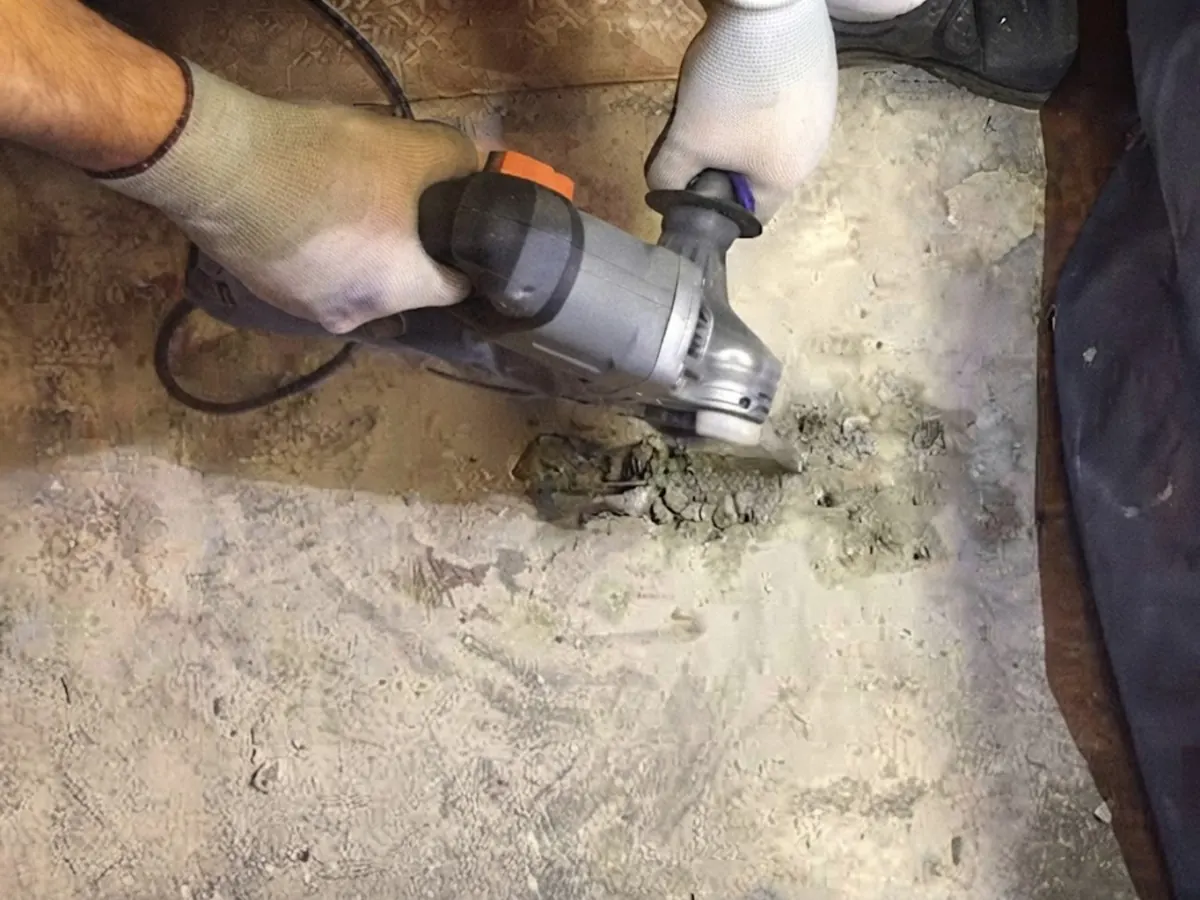
A Warm Floor, Damp Carpet or Water at the Edge of the Garage Slab
Nobody sees a slab leak directly. They feel a warm patch on the tile, find carpet damp with no spill, hear water running when every tap is off, or notice water at the edge of a garage slab near the foundation.
A warm spot usually means a hot water line is leaking, since that heat travels up through the concrete. A cold, damp area points to the cold line. A water heater sitting on a garage slab adds one more possibility, because a leak at its connections can also track along the slab edge.
The quickest confirmation is the meter test: close every fixture and watch the meter for an hour. Movement with nothing running means water is escaping somewhere, and a slab line is one of the candidates.
In Nampa, slab leaks show up most in garage slabs and in newer slab-on-grade homes in the subdivisions on the city's edges, such as those toward Lake Lowell. Crawlspace homes on the older north side rarely have them, since their pipes run where you can see them.
Emergency Slab Leak Repair When Water Comes Up Through the Floor
A slab leak turns urgent when water reaches the surface: wet carpet with no source, warm water pooling at a baseboard or a crack in the garage slab that stays damp. By then the leak has usually been running a while, and the water under the floor keeps spreading.
Close the main shutoff and call the 24/7 line. If the wet spot feels warm, the leak is likely on the hot side, so turn the water heater off too. An emergency visit confirms the leak with pressure testing and can isolate or reroute the failed line so the house has water again.
Finding the Leak Without Breaking the Floor
We isolate hot and cold lines separately to learn which one is leaking. Then acoustic listening equipment picks up the sound of pressurized water escaping through the concrete, and thermal imaging traces a hot-water leak by its heat signature on the floor surface.
The goal is a small marked area, not a guess. The general process is the same one described on our hidden leak detection page, with extra steps because concrete muffles sound and spreads heat.
Direct Repair, Reroute or Repipe
Each option has real trade-offs. The right one depends on where the leak is, how old the pipe is and what flooring sits on top.
| Option | What happens | Best when | Trade-off |
|---|---|---|---|
| Direct repair | Cut the slab at the leak, repair the pipe, patch the concrete | One leak, pipe otherwise sound, accessible flooring | Flooring removal and patching at that spot |
| Reroute | Abandon the under-slab line and run new pipe through walls or attic, installed and tested to the Uniform Plumbing Code (UPC) | Pipe is aging or leak is under costly flooring | Some wall openings, but no slab cutting |
| Repipe | Replace the home's supply lines entirely | Multiple slab leaks or failing pipe throughout | Largest project, longest-lasting fix |
If this is not the first slab leak, rerouting or replacing the supply lines usually beats a second direct repair, because the same pipe tends to fail again nearby.
Water Coming Up Through the Floor?
Close the main shutoff to stop the flow, then call us any hour.
What to Do When You Suspect a Slab Leak
- Close the main if water is visible. Surface water from a slab means a significant leak. Stop the flow first.
- Turn off the water heater if hot water is involved. A warm floor means the heater is refilling constantly and running up energy use.
- Pull back wet rugs and furniture. Let the floor surface breathe and protect belongings.
- Photograph the area and read the meter. Useful for the plumber and for any insurance claim.
- Avoid cutting into the floor yourself. Without locating first, you risk opening the wrong spot.
What Slab Leak Repair Costs Depends On
Locating the leak is priced separately. The repair cost depends on which option you choose and what flooring is involved.
Many homeowner policies cover access to the leak and the resulting water damage, but not the pipe repair. Some cover a reroute. Check your policy and keep the detection report.
Want your real number? Call (208) 679-8357.
Slab Leak Questions
Less common than in slab-heavy regions, because many Treasure Valley homes are built over crawlspaces. They do occur in slab-on-grade homes, additions and garage slabs, and they are harder to spot when they do.
A hot water line leaking under or inside the slab is the most likely cause. Close the water heater supply or turn off the heater and call for detection.
Often, especially when the pipe is aging or the leak is under expensive flooring. Rerouting bypasses the old line entirely, which also prevents the next leak in that section.
A long-running leak can soften soil under the slab. That is one reason not to wait once you suspect one.
Yes, including Caldwell and the other nearby towns. A water heater leak on a garage slab is covered on our page about fixing leaking heaters.